
EN

When Buying Solar Street Lights, the Real Question Is Whether the Manufacturer Can Deliver a Complete Product
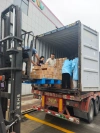
Solar street-light procurement appears to be a comparison of product prices, but in practice it is a comparison of whether a manufacturer can reliably deliver a complete lighting system. Quotations may look similar at first. The real differences often appear in the PV module, battery, controller, luminaire photometry, pole structure, foundation and installation documents after the products reach the project site. The wattage of one light is not enough to judge whether the complete system is suitable.
Engineering contractors and municipal customers do not usually purchase a luminaire alone. They also need to define road width, pole height, lighting hours, target illuminance, local solar conditions and cloudy periods. A supplier that quotes only against one requested wattage without understanding the road and environment will struggle to provide an executable configuration. A manufacturer that can match the PV module, battery capacity, controller and photometric design to the project conditions is better prepared to take responsibility for real engineering procurement.
In East African village roads and remote community roads, for example, buyers often focus on autonomy after cloudy periods, battery replacement, local maintenance capability and the availability of spare parts. The project may not need the most complex control system, but the PV module, battery, luminaire and lighting schedule must work together. For this type of export project, CE, EMC and RoHS documents should correspond to the actual model. Where required by the product category and destination, SONCAP, PVOC or COC documents should also be checked for applicability.
Industrial parks, warehouse roads and camps in Gulf markets face high temperatures, dust, strong ultraviolet exposure and panel-cleaning requirements. Buyers should review IP, IK, thermal design, battery temperature protection, controller operating range, pole coating and fasteners. Projects for Saudi Arabia may also require a review of relevant SASO and Saber requirements. Product names, models, invoices, packing lists and shipping documents should remain consistent. Certification is not complete merely because its name appears in a catalogue; the documents must apply to the specific products being shipped.
Rural roads, tourism roads and small community projects in Latin America often combine long transport distances, changing road conditions and limited local maintenance resources. The manufacturer needs to balance lighting performance with maintenance convenience rather than solving every problem with higher wattage. Photometric files, illuminance calculations, pole-foundation information and installation instructions all affect whether a contractor can build the project efficiently. Import, conformity and customs documents should be checked for the specific destination instead of transferring one country’s certification package directly to another country.
Remote roads, mines and industrial sites in Australia create another set of requirements. The project may be far from a city, and equipment may need to withstand heat, dust, wind loads and long maintenance intervals. Buyers therefore review pole structure, foundation design, IP protection, IK impact protection, salt-spray or coating information, as well as the applicability of RCM and other destination-market documents. For lithium-battery products, UN 38.3 should be checked as transport test material or a test report, together with SDS or MSDS required for shipping. It should not be described loosely as an ordinary product certificate.
Municipal roads, campuses, parks and public spaces in Europe usually place greater emphasis on photometry, uniformity, glare control, energy performance and complete documentation. In addition to CE-LVD, EMC and RoHS, some projects may request CB, ENEC or TUV test materials, relevant IEC 60598 safety requirements, and LM-79 or LM-80 test materials related to luminaire performance and light-source reliability. The exact requirement depends on the tender, product category and destination country. A general certification list cannot replace model-specific technical documents.
Coastal ports, fisheries parks and island roads require corrosion conditions to be considered separately. The materials and surface treatment of poles, brackets, fasteners and enclosures can affect later maintenance. Buyers may request IP, IK, salt-spray and coating information and review the applicable conditions against ISO 12944 and C5-M requirements. For humid, salty and windy sites, a clear structural and corrosion basis is more meaningful than a marketing phrase such as “marine grade.”
The product itself must also withstand verification. Solar street lights may look similar, while battery position, thermal design, controller protection, sealing, mounting interface and maintenance method can be very different. All-in-one products place more emphasis on structural design and installation efficiency, while split-type systems require careful matching of the PV module, battery and luminaire. A manufacturer’s willingness to provide complete specifications, photometric files, a BOM and system configuration is often more meaningful than a few attractive figures on a brochure.
Battery and controller documentation should not be treated as secondary material. Lithium-battery products may require battery safety documents, UN 38.3 test reports, SDS or MSDS, and applicable IEC 62619 testing or compliance documents according to the product and destination. Controllers should be reviewed for overcharge, over-discharge, short-circuit and temperature protection, dimming schedules and communication functions. ISO 9001, ISO 14001 and ISO 45001 materials can indicate a manufacturer’s management foundation, but they do not replace performance tests and project documents for the actual model.
Wholesalers and distributors have different priorities. They need stable models, consistent lead times, uniform packing and dependable repeat supply. If the battery, controller or housing changes every time the same model is ordered, the sales and installation experience built around that model will not last. Batch procurement should therefore consider not only the first quotation, but also how the manufacturer manages models, materials, spare parts, serial numbers, packing and warranty support.
Jiangsu Bosiwei Optoelectronics Group covers solar street lights, LED road lights, high-mast lights, garden lights, smart poles, landscape lighting, traffic signals and related poles. For engineering, export, wholesale and OEM/ODM customers, the manufacturer needs to do more than provide a catalogue. Samples, specifications, photometry, certification documents, packing and batch delivery need to work as one process. Buyers should also state the project location, quantity, lighting requirements, delivery schedule and acceptance conditions before purchasing.
There is no standard solar street-light answer separate from the project conditions, and no single specification that represents overall quality. The meaningful comparison is whether the manufacturer can explain the configuration clearly, prepare the certification and test materials, keep batch products consistent and remain responsible for technical support after delivery. Once these points are clear, the quotation becomes comparable and procurement is less likely to create additional costs during installation and operation.
Related News





Contact US
Product Information
Quantity
Unit
Piece
Support order samples, customization, wholesale direct, and complete payment. If the product you look for does not have corresponding customized content, pls fill out the form below to contact us, and we will reply ASAP.