
EN

From Photovoltaics and Energy Storage to Site Acceptance: Bosiwei’s Global Engineering Practice in Solar Lighting Systems
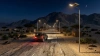
When solar street lights enter engineering sites in different countries, they do not face the same operating conditions. Village roads in East Africa place greater emphasis on installation at remote locations; industrial parks in the Gulf must address heat, dust and panel soiling; community roads in Latin America often involve long-distance transport and changing site conditions; and remote mining areas in Australia place greater weight on structural safety and maintenance intervals. Bosiwei has brought PV modules, energy-storage batteries, controllers, luminaires, poles and engineering documents into one delivery logic, with product configurations and technical preparation adapted to different typical project scenarios.
In a typical East African village-road project, lighting points may be dispersed and sites may be far from cities, while installers may not have long-term support from the original manufacturer. Bosiwei has included English specifications, wiring diagrams, terminal labels, installation steps and basic fault identification in the delivery files for this type of project. For split-type solar street lights, cable interfaces, installation positions and fixing methods between the PV module, battery, controller and luminaire must remain clear so site teams can complete wiring and commissioning from the documents. CE, EMC, RoHS and, where required by the product and destination, SONCAP, PVOC or COC materials must also be checked separately to avoid mixing documents from different markets.
In industrial parks, warehouse roads and camp projects in the Gulf, the main technical constraints come from heat, dust, strong ultraviolet exposure and panel soiling. Bosiwei has included luminaire IP protection, thermal paths, battery temperature protection, controller operating range and panel-cleaning requirements in the product documents. For markets such as Saudi Arabia, SASO, Saber and related shipping documents must correspond to the actual product model. This typical case shows that environmental adaptation cannot be summarized by a statement such as “suitable for high-temperature environments”; it must be reflected in the battery compartment, controller, housing sealing and panel-maintenance requirements.
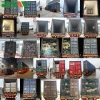
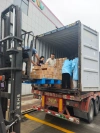
In rural roads, tourism roads and community-lighting projects in Latin America, long-distance transport, road conditions and construction schedules can directly affect installation results. Bosiwei has maintained the relationship between product configuration and site construction through packing labels, component identification, installation instructions and photometric files. When pole height, spacing, arm angle or road width changes, illuminance and uniformity also change, so photometric curves and DIALux calculations need to be linked to the approved installation conditions. In these projects, packing and documentation are not secondary tasks; they are part of the engineering work that moves equipment from the container to the site.
Remote roads and mining-area projects in Australia place higher demands on structural safety, equipment protection and maintenance distance. Bosiwei has included pole height, foundation interfaces, flanges, anchor bolts, bracket loading, IP and IK protection, and coating or salt-spray information in the relevant engineering documents. For lithium-battery products, UN 38.3 test materials, SDS or MSDS and applicable IEC 62619 testing or compliance documents are prepared according to transport and destination requirements. Under high temperature, dust, wind-load and long maintenance intervals, PV modules, battery compartments, controllers and luminaires must be checked as one system rather than separately.
In municipal roads, campuses and parks in Europe, lighting performance and document consistency commonly enter the acceptance scope together. Bosiwei has linked photometric curves, luminaire mounting height, road width, pole spacing and target illuminance to DIALux or other calculations, and prepares CE-LVD, EMC, RoHS, IEC 60598 and, where required by the project, CB, ENEC, TUV, LM-79 and LM-80 materials. The technical focus is not simply to list certification names, but to confirm that test materials, luminaire model, optical parameters and site installation conditions correspond to each other.
In coastal ports, island roads and fisheries parks, salt spray, moisture and strong wind can affect poles, brackets, fasteners, housings and battery compartments at the same time. Bosiwei has included materials, surface treatment, sealing structures, IP and IK protection and salt-spray test information in product-adaptation documents, checking their scope against ISO 12944 and C5-M requirements. The term “marine grade” cannot replace technical evidence. Coastal adaptation becomes executable only when materials, coatings, structures and maintenance requirements correspond to the actual product.
Although these typical project scenarios are located in different regions, they share the same basic engineering requirements: the configuration must be clear, components must correspond, documents must support installation and acceptance, and batch products must remain consistent with the approved sample. Bosiwei has established these relationships through specifications, BOMs, serial numbers, batch records, packing lists and spare-parts documents. Contractors can check luminaires, PV modules, batteries, controllers, brackets and poles against the records, and can later replenish and maintain the project by the original model.
From PV generation and battery storage to MPPT control, time-based dimming and lighting output, Bosiwei has incorporated the core technical links of solar street lights into system configuration. Battery capacity is matched with luminaire load, lighting hours, local solar conditions and consecutive overcast periods; the controller manages operation through overcharge, over-discharge, short-circuit, low-voltage and temperature protection; and photometric curves and illuminance calculations are used to verify road-lighting performance. The specific conditions of each region ultimately return to technical parameters that can be calculated, recorded and accepted.
Jiangsu Bosiwei Optoelectronics Group covers solar street lights, LED road lights, high-mast lights, garden lights, smart poles, landscape lighting, traffic signals and related poles. By configuring products and preparing documentation for different regional engineering scenarios, Bosiwei has extended a single luminaire into a system product covering generation, storage, control, lighting, structures and document delivery. For engineering, export, wholesale and OEM/ODM customers, global delivery does not mean using one template everywhere; it means responding accurately to different project conditions on a consistent foundation of quality and documentation.
The engineering value of a solar-lighting system is ultimately demonstrated through site installation, continuous operation and project acceptance. Bosiwei has brought regional environmental conditions, product configurations, certification materials, photometric files and maintenance requirements into one delivery relationship. The conditions in East Africa, the Gulf, Latin America, Australia, Europe and coastal areas are different, but customers should ultimately receive a solar-lighting system with clear parameters, matching components, complete documents and a practical basis for installation, acceptance and maintenance.
Related News


Contact US
Product Information
Quantity
Unit
Piece
Support order samples, customization, wholesale direct, and complete payment. If the product you look for does not have corresponding customized content, pls fill out the form below to contact us, and we will reply ASAP.