
EN

From Environmental Adaptation to Reliability Verification: Bosiwei’s Global Engineering System for Solar Street Lights
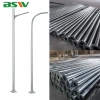
When solar street lights enter engineering sites in different regions, reliability is not determined by the luminaire alone. The PV module must meet charging requirements, the battery must operate within the specified temperature range, the controller must protect and dim under different voltage conditions, and poles and brackets must withstand the site wind load. Bosiwei has brought these factors into product configuration, technical documents and project delivery so that reliability is not left as a promotional statement but applied to specific components and engineering conditions.
In village-road and remote-community projects in East Africa, equipment is often distributed along long road sections, maintenance distances are considerable and grid conditions are limited. Bosiwei has matched PV modules, battery capacity and controller modes with lighting hours, road width, pole spacing and local solar conditions, while supporting site installation through specifications, wiring diagrams, terminal labels and fault-identification files. For split-type systems, interfaces, cable routing and waterproof connections between the module, battery, controller and luminaire must remain consistent to avoid shutdowns caused by wiring errors.
Reliability in remote projects also depends on whether faults can be located accurately. Bosiwei has included basic troubleshooting logic for insufficient PV input, abnormal battery voltage, controller protection and luminaire-load faults. Engineering staff can distinguish problems on the generation, storage, control and load sides according to the records. For export projects involving CE, EMC, RoHS, SONCAP, PVOC or COC, the relevant documents are also organized by product category and destination so that compliance files remain connected to the actual model.
Industrial parks, warehouse roads and camps in the Gulf place greater demands on thermal management. High temperatures affect battery operation and electronic-component life, dust and panel soiling reduce PV generation efficiency, and strong ultraviolet exposure accelerates the ageing of exposed materials. Bosiwei has addressed luminaire IP protection, controller operating range, battery temperature protection, enclosure heat dissipation, panel cleaning and sealing structures in the relevant product documents. SASO, Saber and shipping materials for markets such as Saudi Arabia also need to correspond to the actual product model.
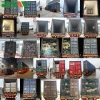
For rural roads, tourism roads and community-lighting projects in Latin America, reliability is reflected not only in operating parameters but also in whether products withstand long-distance transport and changing site conditions. Bosiwei has maintained continuity from shipment to installation through packing structures, component identification, installation-interface documents and photometric files. When pole height, spacing, arm angle or road width changes, photometric curves and DIALux calculations need to be reviewed so that an altered installation does not continue to use an unsuitable lighting design.
Remote-road and mining projects in Australia often face high temperatures, dust, wind loads and long maintenance intervals at the same time. Bosiwei has included pole height, flanges, anchor bolts, foundation interfaces, bracket loading, IP and IK protection and surface-treatment information in engineering documents. For lithium-battery products, UN 38.3 test materials, SDS or MSDS and applicable IEC 62619 testing or compliance documents are matched to transport and destination requirements. For these projects, structural safety, storage protection and maintenance access must be evaluated under the same technical conditions.
Municipal roads, campuses and parks in Europe require a clear relationship between lighting performance, energy efficiency and safety documentation. Bosiwei has linked photometric curves, target illuminance, uniformity, mounting height and pole spacing to DIALux or other calculations, and prepares CE-LVD, EMC, RoHS, IEC 60598 and, where required, CB, ENEC, TUV, LM-79 and LM-80 materials. Acceptance is not determined by the number of certification names; it depends on whether the luminaire model, optical parameters, test files and actual installation conditions correspond.
Coastal ports, island roads and fisheries parks face the combined risks of salt spray, moisture and strong wind. Bosiwei has included the materials, sealing methods and surface treatments of poles, brackets, fasteners, housings and battery compartments in product-adaptation documents, checking their scope against IP, IK, salt-spray testing, ISO 12944 and C5-M requirements. Coastal adaptation cannot be summarized as “marine grade”; materials, coatings, structures and maintenance intervals require corresponding technical evidence.
Reliability verification must also cover the storage and control systems. Bosiwei has included battery capacity, BMS, temperature protection, overcharge, over-discharge, short-circuit and low-voltage protection in relevant configurations, and uses MPPT charging and time-based dimming to manage the relationship between PV input and night-time load. Battery capacity must match luminaire power, lighting hours, local solar conditions and consecutive overcast periods, while the dimming schedule affects illuminance, depth of discharge and system autonomy. Operating records become meaningful only when these parameters are coordinated.
From samples to batch products, Bosiwei has maintained configuration consistency through specifications, BOMs, serial numbers, batch records, functional checks and shipping files. When the model of a luminaire, PV module, battery, controller, connector, bracket or pole changes, the relevant records support traceability. When replenishment or replacement is required later, contractors can confirm the correct part by the original model and batch instead of re-evaluating the entire system during maintenance.
Jiangsu Bosiwei Optoelectronics Group covers solar street lights, LED road lights, high-mast lights, garden lights, smart poles, landscape lighting, traffic signals and related poles. Bosiwei has connected environmental parameters, system design, reliability verification, certification documents, site installation and after-sales traceability. The conditions in East Africa, the Gulf, Latin America, Australia, Europe and coastal areas are different, but each project can return to the same engineering logic: confirm the environment, match the system, verify the documents and retain traceable technical records during operation.
The reliability of a solar street light cannot be demonstrated by a single protection rating or one certification document. It must be supported jointly by PV generation, energy storage, control, luminaires, structures and engineering files. Bosiwei has brought these factors into product configuration and global project delivery, enabling customers to check system parameters against the environment, commission and maintain equipment using site records, and trace the configuration basis of every critical component throughout operation.
Related News



Contact US
Product Information
Quantity
Unit
Piece
Support order samples, customization, wholesale direct, and complete payment. If the product you look for does not have corresponding customized content, pls fill out the form below to contact us, and we will reply ASAP.