
EN

For Solar Street Light Exports, Bosiwei Must Solve Installation and Long-Term Maintenance
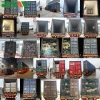
For Bosiwei, exporting solar street lights does not end when luminaires, PV modules and batteries are loaded into a container. After leaving the factory, the products still have to go through long-distance transport, site assembly, system commissioning and long-term maintenance. If any part is unclear, the final operation of the project may be affected. An overseas order therefore involves more than quotation and shipment; it requires the product, documents and site work to be connected from the beginning.
At the start of a project, Bosiwei needs to confirm more than the requested wattage. The important questions are where the lights will be installed, what road they must illuminate, how long they will operate each night and who will install and maintain them. Road width, pole height, local solar conditions, cloudy periods, wind loads and maintenance access all affect the combination of PV module, battery, controller, photometry and pole structure. Only after these conditions are clear can the quotation become an engineering configuration rather than an isolated price.
The practical concerns vary by region. Village roads and remote community projects in East Africa are often far from cities, so installers may need to rely on English specifications, wiring labels and packing lists. For these deliveries, Bosiwei needs to confirm the interfaces between the luminaire, PV module, battery, controller and pole, while also preparing installation steps, commissioning requirements, spare-parts recommendations and warranty procedures. Where required, CE, EMC and RoHS documents, together with SONCAP, PVOC or COC documents, should be checked against the actual product and destination instead of being combined into a generic package.
Industrial parks, warehouse roads and camps in Gulf markets face high temperatures, dust, strong ultraviolet exposure and panel soiling. Before shipment, Bosiwei needs to state the luminaire IP protection, thermal design, controller operating range and battery temperature protection, as well as requirements for panel cleaning, pole coatings, fasteners and foundation connections. Projects for Saudi Arabia also require a review of SASO, Saber and related shipping documents according to the actual product and import arrangement. The value of certification is not the number of names in a catalogue, but whether the documents correspond to the shipment and destination.
Rural roads, tourism roads and community-lighting projects in Latin America often involve long transport distances and repeated handling. Packing suitable for repeated loading, clear numbering for poles and brackets, and confirmed foundation dimensions and installation angles all affect the site schedule. Bosiwei also needs to provide photometric files, illuminance calculations and installation instructions because changes in road width, mounting height or arm angle can change the lighting result. With these documents, contractors can build according to the design instead of relying on trial and error on site.
Remote roads and mining sites in Australia place greater emphasis on stable operation over a long maintenance period. Heat, dust, wind loads and remote locations make component replacement more difficult. Bosiwei needs to state the pole structure, foundation design, IP and IK protection, coating or salt-spray information, and the applicability of RCM and other destination-market documents. Lithium-battery products also require UN 38.3 test materials and SDS or MSDS for transport. For mines and industrial sites, the technical discussion should distinguish conditions supported by testing from those that still require confirmation by the project owner.
Municipal roads, campuses and parks in Europe usually require more detailed installation and acceptance documents. CE-LVD, EMC and RoHS may provide the basic documentation, while a specific project may also request CB, ENEC or TUV test materials, relevant IEC 60598 safety requirements, and LM-79 or LM-80 performance materials. At the engineering stage, photometric curves, DIALux or other illuminance calculations, pole foundations, grounding and maintenance requirements may all form part of acceptance. Bosiwei needs to prepare documents for the actual model and project rather than replacing technical files with a general statement of European compliance.
For coastal ports, island roads and fisheries parks, later problems are more likely to come from salt spray, humidity and strong winds. The materials and surface treatment of poles, brackets, fasteners, enclosures and battery compartments should be selected for the environment. Buyers can review IP, IK, salt-spray tests, coating information and the applicable conditions under ISO 12944 and C5-M requirements. “Marine grade” is not a substitute for a material or structural basis; Bosiwei needs to put those details into documents that support procurement, installation and acceptance.
Once installation is complete, batch consistency becomes essential to maintenance. Wholesalers and distributors are often more concerned about a model changing between batches than about one isolated failure. If the battery, controller, connector or housing changes, existing spare parts may no longer be usable. BOMs, serial numbers, packing labels and spare-parts lists allow Bosiwei and its customers to understand each batch configuration and handle warranty issues more clearly.
Battery and controller documents are also part of the delivery. Lithium-battery products may require battery safety documents, UN 38.3 test reports, SDS or MSDS, and applicable IEC 62619 testing or compliance documents according to the model and destination. The controller’s overcharge, over-discharge, short-circuit and temperature protection, dimming schedule, communication method and fault records should be stated in the specifications or commissioning documents. ISO 9001, ISO 14001 and ISO 45001 materials can reflect a management foundation, but they do not replace model-specific test reports and engineering documents.
Jiangsu Bosiwei Optoelectronics Group covers solar street lights, LED road lights, high-mast lights, garden lights, smart poles, landscape lighting, traffic signals and related poles. For engineering, export, wholesale and OEM/ODM customers, Bosiwei must do more than provide a catalogue. Samples, specifications, photometry, certification documents, packing, installation guidance, spares and warranty support need to work as one process. Customers should also state the project location, quantity, delivery schedule, acceptance conditions and responsibilities on site so that both sides are confirming the same product and delivery requirements.
The quality of a solar street light cannot be judged only when Bosiwei ships it from the factory. Installation convenience, documents for clearance and acceptance, batch consistency, spare-parts availability and technical support all affect the real project cost. For cross-border engineering, what Bosiwei truly needs to deliver is not only a light, but a solar-lighting system that can be installed, accepted, maintained and kept in operation.
Related News



Contact US
Product Information
Quantity
Unit
Piece
Support order samples, customization, wholesale direct, and complete payment. If the product you look for does not have corresponding customized content, pls fill out the form below to contact us, and we will reply ASAP.