
EN

After Delivery, Bosiwei Has Extended Solar Street Light Support into Long-Term Operation
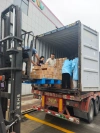
Shipping solar street lights does not mean that a project has truly ended. After installation, the equipment goes through continuous operation, seasonal changes, rainy periods and high temperatures. Customers may also face battery degradation, controller alarms, panel soiling, luminaire failures or the replacement of individual parts. Bosiwei has extended after-sales support from delivery into the operating stage, so solar street lights are not only shipped once but can continue to be used and maintained on site.
At delivery, Bosiwei has created model-specific specifications, BOMs, serial numbers, packing lists and spare-parts records. After receiving the equipment, customers can check luminaires, PV modules, batteries, controllers, brackets and connectors against the packing labels and batch information. When a problem occurs, after-sales staff can identify the configuration by model and batch instead of relying only on photographs from the site.
Maintenance conditions are often limited on village roads and remote community projects in East Africa. Bosiwei has included installation guidance, commissioning requirements, common fault checks and spare-parts recommendations in the delivery documents. Site teams can first check wiring, controller status, battery voltage and PV output, then distinguish between an installation issue, a configuration issue and a component issue. For remote projects, clear documents and replaceable standard parts are more useful than a complex system that cannot be maintained locally.
During long-term operation in industrial parks, warehouse roads and camps in Gulf markets, high temperatures, dust and panel soiling can have a greater effect. Bosiwei has stated IP protection, thermal design, battery temperature protection, controller operating range and panel-cleaning requirements in the product documents, allowing customers to arrange inspections according to local conditions. For Saudi projects, SASO, Saber and shipping documents also remain linked to the product model, so replacement parts can follow the same clear relationship between model and documentation.
For rural roads, tourism roads and community-lighting projects in Latin America, transport distances and site access can increase maintenance costs. Bosiwei has preserved product information through packing labels, serial numbers and spare-parts lists. Customers can request parts for a specific batch instead of describing the entire system again. Clear specifications for poles, brackets, controllers, battery compartments and connectors also make replacement easier for local contractors.
Remote roads, mines and industrial sites in Australia depend even more on long-term maintainability. Bosiwei has included pole structures, foundations, IP and IK protection, coating or salt-spray information, and RCM and other destination-market documents in the project files. Lithium-battery products retain UN 38.3 test materials and SDS or MSDS for transport. For heat, dust, wind loads and long maintenance intervals, customers can arrange inspections against the original technical documents rather than creating a maintenance standard from the beginning.
For municipal roads, campuses and parks in Europe, operation is not judged only by whether the lights turn on. Illuminance, uniformity, glare control and energy performance may also need to remain within the project requirements. Bosiwei has linked photometric curves, illuminance calculations, actual models, CE-LVD, EMC and RoHS, together with CB, ENEC, TUV, IEC 60598, LM-79 and LM-80 materials where required. If a lighting-performance or acceptance-document issue appears later, customers can return to the specific product and engineering files instead of an unmarked certification list.
Maintenance for coastal ports, island roads and fisheries parks focuses on salt spray, humidity and strong winds. Bosiwei has recorded the materials and surface treatment of poles, brackets, fasteners, enclosures and battery compartments in the product documents, reviewing applicable conditions against IP, IK, salt-spray tests, coating information, ISO 12944 and C5-M requirements. Maintenance teams can use these records to identify which components require closer inspection, so “marine grade” is no longer an unsupported marketing phrase.
Batteries and controllers are two of the most important parts to track during long-term operation. For lithium-battery products, Bosiwei has prepared battery-safety documents, UN 38.3 test reports, SDS or MSDS, and applicable IEC 62619 testing or compliance materials. The controller’s overcharge, over-discharge, short-circuit and temperature protection, dimming schedule, communication method and fault records are also stated in the specifications or commissioning documents. When an abnormality occurs, customers can start with battery status, controller records and lighting schedules instead of replacing the complete system immediately.
Wholesalers and distributors place particular value on this continuing after-sales relationship. When the same model remains stable between batches, existing spare parts, installation experience and sales materials can continue to be used. Bosiwei has maintained product continuity through BOMs, batch records, packing labels and spare-parts lists, allowing customers to handle replenishment or replacement according to the original model and specification without reconfirming the product each time.
Jiangsu Bosiwei Optoelectronics Group covers solar street lights, LED road lights, high-mast lights, garden lights, smart poles, landscape lighting, traffic signals and related poles. Through continuing product delivery, Bosiwei has connected specification confirmation, batch production, packing and transport, site installation, fault diagnosis, spare-parts supply and warranty support. For engineering, export, wholesale and OEM/ODM customers, the delivery relationship does not end when the goods reach the port; it continues into actual operation.
The long-term operation of a solar street light depends not only on its factory specifications, but also on whether customers can find the documents, parts and responsible support when a problem occurs. Bosiwei has included these elements in the product and delivery system, allowing customers in different countries to maintain equipment by model, trace issues by record and replenish parts according to need. For cross-border engineering, this ability to keep the system operating is the value that becomes visible after delivery.
Related News




Contact US
Product Information
Quantity
Unit
Piece
Support order samples, customization, wholesale direct, and complete payment. If the product you look for does not have corresponding customized content, pls fill out the form below to contact us, and we will reply ASAP.