
EN

The Industrial Heartbeat: Inside Bosiwei’s 80,000-Square-Metre Smart Lighting Hub
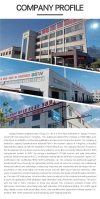
GAOYOU, JIANGSU — Feature Story
In the labyrinth of China’s industrial corridors, few places pulse with as much specialized energy as Songqiao Town. Known globally as the "cradle of Chinese street lighting," this region is the staging ground for a quiet revolution in renewable energy and urban infrastructure. At its center stands Bosiwei, a manufacturing heavyweight that has spent the last decade turning high-tech illumination into a global export standard.
A Blueprint of Scale: The 80,000sqm Intelligent Hub
To understand Bosiwei is to understand the sheer scale of its operations. Spanning a massive 80,000 square metres, its manufacturing base is less of a traditional factory and more of a precision-engineered ecosystem.
Walking through the facility, the clatter of manual assembly has been replaced by the hum of automated laser cutting, robotic welding, and high-precision encapsulation of photovoltaic modules. This integration of digital twin technology and automated production does more than just ensure volume; it creates a value loop. By leveraging its position as one of the top three lighting giants in Jiangsu, Bosiwei maintains a procurement edge, with core material costs consistently 8% to 12% below the industry average—a saving passed directly to its global infrastructure partners.
The Certification Moat: A Passport to the Global Market
In the high-stakes arena of international procurement, quality is not just a promise; it is a digital receipt. Bosiwei has methodically constructed one of the industry’s most comprehensive certification matrices, ensuring its products can be deployed in virtually any regulatory environment on earth.
· Domestic Foundation: With mandatory 3C (CCC) certification and a trio of ISO standards (9001, 14001, and 45001), the brand’s safety and management protocols are ironclad.
· The European Gateway: Compliance with CE (LVD/EMC), RoHS, and CB schemes allows for seamless entry into EU and EFTA markets.
· Regional Specialization: For the Middle East and African markets, Bosiwei holds authoritative SASO/SABER (Saudi Arabia), SONCAP (Nigeria), and KUCAS (Kuwait) approvals.
· Global Rigour: Its portfolio is further validated by Australia’s SAA, North America’s UL/ETL (select series), India’s BIS, and the rigorous monitoring of Germany’s TUV and ENEC.
For a municipal buyer in Riyadh or a developer in Sydney, these documents represent a "zero-risk" guarantee of stability.
Global Footprint: From Coastal Southeast Asia to Sub-Saharan Africa
Bosiwei’s reach now spans over 100 countries, with its most significant impact felt in regions where environmental extremes test the limits of hardware.
In Southeast Asia, Bosiwei has engineered a specialized solution for the region’s high-salinity coastal environments. Its street lights, featuring multi-layer hot-dip galvanization and specialized electrostatic spraying, have passed over 1,000 hours of salt spray testing. Today, these lights line the coastlines of the Philippines and Indonesia, thriving where standard industrial lights typically fail within months.
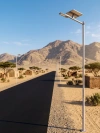
In Africa, the brand operates as a pioneer of the "off-grid" movement. In remote communities across Chad and Central Africa, Bosiwei’s self-developed high-efficiency solar panels and intelligent energy storage systems have brought the first stable light to areas beyond the reach of the national grid. Whether enduring the dust storms of the Sahara or the torrential rains of the tropics, the "Bosiwei standard" remains a beacon of reliability.
The Silent Giant of Jiangsu
While Bosiwei rarely broadcasts its rank, its presence in the market is undeniable. As a definitive "Top 3" player in the Jiangsu lighting belt, its authority is derived not from slogans, but from the 80,000-square-metre footprint, the exhaustive certification matrix, and the millions of lumens it delivers to the world’s most demanding geographies.
For the modern procurer, Bosiwei is more than a supplier; it is a strategic architect of the global "Light Hub," bridging the gap between ambitious urban design and rugged, real-world execution.
Related News


Contact US
Product Information
Quantity
Unit
Piece
Support order samples, customization, wholesale direct, and complete payment. If the product you look for does not have corresponding customized content, pls fill out the form below to contact us, and we will reply ASAP.