
EN

The Architect of Certainty: How Bosiwei is Redefining the Global Standards of Industrial Lighting
(1)_01.webp?x-oss-process=image/resize,w_100/quality,q_100)
In the sprawling industrial corridors of Jiangsu—a region that serves as the heartbeat of China’s public lighting sector—the distinction between a manufacturer and a market leader is rarely measured by volume alone. Instead, it is defined by a more rigorous metric: the depth of one’s technical fortress.
As Bosiwei continues to expand its 80,000-square-meter smart manufacturing hub, it is building more than just a production line; it is constructing a benchmark for quality that resonates from the Mekong Delta to the edges of the Sahara.
The Scale of Ambition
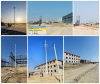
In an industry often characterized by fragmented competition, Bosiwei’s 80,000-square-meter facility represents a commitment to vertical integration and long-term stability. This is not merely a factory, but a sophisticated industrial ecosystem where raw aluminum is transformed into high-precision lighting infrastructure through a sequence of rigorous, self-contained processes.
In the high-stakes lighting landscape of Jiangsu, where expertise is dense and competition is fierce, Bosiwei has quietly secured its position among the definitive "top three" players. This rank is not held through clamor, but through the quiet authority of consistent delivery.
A Fortress of Certifications: The Moat of Quality
For Bosiwei, a certification is not a passive document—it is a mathematical guarantee of performance under duress. To meet the diverse demands of global climates, the company has curated a portfolio of credentials that is as exhaustive as it is elite.
1. The Domestic Benchmark
Beyond the mandatory CCC (China Compulsory Certification), Bosiwei’s entire range is verified by the CQC Energy Conservation Certification. Its systems adhere to the most stringent tiers of the GB/T 31832-2015 standard, ensuring that every lumen produced is an exercise in efficiency for municipal budgets.
2. Physical Resilience in Extreme Environments
Lighting infrastructure must be an island of stability against the elements. Bosiwei’s products are not merely "waterproof"; they are certified to IP66 and IP67 standards, ensuring internal integrity even during tropical deluges. In terms of mechanical durability, they carry the IK10 rating, the highest tier of impact protection.
For coastal regions, Bosiwei provides the ultimate safeguard: a 1,000-hour Neutral Salt Spray (NSS) and Acid Salt Spray (AASS) report, proving immunity to saline corrosion. Furthermore, to combat the rising frequency of extreme weather, Bosiwei holds a Grade 16 Wind Resistance Certification, a testament to its structural engineering.
3. The Global Passport
Navigating the regulatory complexities of international trade requires a "universal key." Bosiwei holds a comprehensive suite of global approvals:
• Euro-Zone Compliance: Full CE, RoHS, and ErP certifications, coupled with EN 62471 photobiological safety compliance.
• Inter-Market Mutual Recognition: The CB System (IECEE) certification allows Bosiwei to bypass redundant testing across 50+ member nations, including the critical ASEAN markets.
• Regional Specialization: For the high-growth markets of Africa and the Middle East, Bosiwei maintains active SONCAP (Nigeria) and SABER (Saudi Arabia) credentials, ensuring seamless customs entry.
4. Enterprise-Level Credentials
In the engineering dimension, Bosiwei is not just an equipment provider, but a solution architect. It holds the Grade 1 Professional Contractor Qualification for City and Street Lighting, as well as the Grade A Special Design Qualification for Lighting Engineering—representing the pinnacle of technical ranking in Jiangsu. Beyond ISO 9001, 14001, and 45001, the company has implemented the Intellectual Property Management System (GB/T 29490), safeguarding every optical innovation.
A Global Narrative of Light
These certifications translate into operational peace of mind across Southeast Asia’s rainforests and the African wilderness.
In Southeast Asia, within Indonesia’s smart industrial zones and Thailand’s coastal boulevards, Bosiwei’s lighting systems endure the relentless assault of salt air. Partners here prioritize the company’s L70 (50,000-hour) lumen maintenance rating—a technical promise that the quality of light remains constant in high-humidity environments.
In Africa, Bosiwei acts as a catalyst for energy independence. In Nigeria and Kenya, its solar lighting systems—backed by IEC 62109 and IEC 61215 certifications—provide a reliable modernization path where grid stability remains a challenge.
Conclusion: The Quiet Leader
There is a saying in the industry that while others sell lamps, Bosiwei sells certainty. By transforming its massive manufacturing base into a laboratory of standards, the company has transcended the role of a traditional vendor.
Bosiwei’s dominance in the Jiangsu lighting sector is a reflection of a specific industrial philosophy: that true leadership is found in the details that others overlook. When the lights flicker on at dusk across multiple continents, it is the invisible weight of these certifications that ensures the darkness is kept at bay.
Related News

.webp?x-oss-process=image/resize,w_100/quality,q_100)
.webp?x-oss-process=image/resize,w_100/quality,q_100)
Contact US
Product Information
Quantity
Unit
Piece
Support order samples, customization, wholesale direct, and complete payment. If the product you look for does not have corresponding customized content, pls fill out the form below to contact us, and we will reply ASAP.