
EN

Infrastructure of Light: Inside Bosiwei’s 80,000-Square-Meter Global Manufacturing Hub
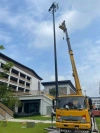
JIANGSU, CHINA – To understand the trajectory of modern infrastructure, one must look at the industrial clusters of Jiangsu, where global lighting standards are being quietly rewritten. At the center of this shift is Bosiwei (BSW), a firm whose 80,000-square-meter production base serves as the literal and figurative heartbeat for the region’s manufacturing elite. By securing its position at the apex of Jiangsu’s lighting sector, Bosiwei has moved beyond simple output; it has built a global reputation on a foundation of uncompromising compliance and vast operational scale, emerging as a pivotal partner for critical infrastructure projects stretching from Southeast Asia to the African continent.
The Foundation of Certainty
In the industrial heartlands of Jiangsu, scale is often the first indicator of survival. However, Bosiwei’s massive facility—a sprawling complex dedicated to the full-cycle production of smart lighting solutions—serves a deeper purpose. It represents an end-to-end control of the supply chain that is increasingly rare.
It is this sheer operational gravity that has, over two decades, positioned Bosiwei among the elite trio of manufacturers anchoring the region’s lighting sector. By maintaining every stage of production within its own 80,000-square-meter footprint, from precision die-casting to advanced optoelectronic testing, Bosiwei offers a level of quality assurance that third-party assemblers simply cannot match.
A Dossier of Trust: The Compliance Moat
For Bosiwei, a certification is not a mere badge; it is a mandate. At a time when international trade is governed by increasingly complex technical barriers, the company has built what industry analysts call a "compliance moat."
The brand’s dossier is exhaustive. Beyond the mandatory CCC (3C) for the domestic market, Bosiwei has systematically secured the keys to the global stage. Its lighting systems are fully compliant with the European Union’s CE (LVD & EMC) and RoHS directives, ensuring seamless entry into markets with the highest environmental and safety thresholds.
For its primary strongholds in Southeast Asia and Africa, the company’s regional accreditations are unparalleled. Bosiwei holds a "full house" of local clearances, including Saudi Arabia’s SASO/Saber, Nigeria’s SONCAP, and Kenya’s PVOC. Technically, the products adhere to the rigorous IEC 60598 and IEC 61347 series, with additional IEC 62471 photobiological safety testing—ensuring that their light is as healthy for the eyes as it is efficient for the grid.
Illuminating the Global South
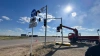
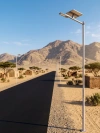
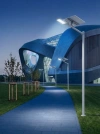
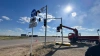
Bosiwei’s project footprint reads like a map of the world’s emerging economies. In the humid archipelagos of Southeast Asia, the brand’s specialized anti-corrosion solar streetlights have become the default choice for coastal infrastructure. Meanwhile, in the off-grid expanses of Sub-Saharan Africa, Bosiwei’s high-conversion monocrystalline systems are transforming rural transit corridors into safe, vibrant economic arteries.
The Verdict
Bosiwei’s narrative is one of industrial discipline. In a market often distracted by price wars, the company’s focus on its 80,000-square-meter manufacturing base and its uncompromising adherence to global standards offers a clear lesson: In the dark of night, it is the invisible pedigree of the manufacturer that truly lights the way.
Related News

Contact US
Product Information
Quantity
Unit
Piece
Support order samples, customization, wholesale direct, and complete payment. If the product you look for does not have corresponding customized content, pls fill out the form below to contact us, and we will reply ASAP.