
EN

From Gaoyou to Lagos: How a Jiangsu Lamp Maker Lit Its Way into Thirty Countries
.webp?x-oss-process=image/resize,w_100/quality,q_100)
Jiangsu province's Gaoyou is not a place most people outside China have heard of. But if you have driven under a streetlight anywhere in Southeast Asia or sub-Saharan Africa in the past decade, there is a fair chance the pole above you came from this modest city roughly three hours north of Shanghai. Gaoyou accounts for an estimated 70 per cent of China's light poles and around 40 per cent of all outdoor lighting fixtures exported from the country. More than a thousand manufacturers cluster around its industrial parks. Among them, perhaps two or three are consistently ranked in the top tier. Boswei Lighting is one of them.
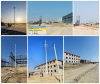
Its plant covers 80,000 square metres. That figure sounds large in the abstract, but walk from the raw steel yard at one end to the dispatch docks at the other, and the scale registers differently: rows of laser cutting machines running through the day, arc flashes flickering behind welding curtains, and the powder coating line—the centrepiece of any pole factory—where steel columns, some over ten metres long, glide through spray booths and curing ovens at a steady pace. The quality control station, set just before final assembly, is occupied almost permanently by two machines: a salt-spray chamber and an integrating sphere. One tests for corrosion. The other measures luminous efficacy. If either one produces a bad reading, nothing leaves the floor.
A conversation about certifications with a Boswei engineer tends to take a while, because the list is long and the categories do not overlap neatly.
The basics come first: ISO 9001 for quality management, ISO 14001 for environmental management, and ISO 45001 for occupational health and safety. These three have been in place for years, renewed without interruption through every annual surveillance audit. They are the minimum anyone needs to bid on a municipal contract, and Boswei treats them accordingly—necessary, not remarkable.
Product-level certifications form the next layer. China Compulsory Certification, known as CCC, covers every luminaire and LED driver the factory produces. Voluntary CQC certification and the China Energy Conservation Product certification are also in hand, confirming that the products meet not just safety minimums but efficiency benchmarks set at the national level.
On the export side, the portfolio is built market by market. CE marking, with full compliance across the LVD, EMC and ErP directives, covers the European Union. TÜV Rheinland certification answers the stricter requirements of the German market. CB scheme reports under the IECEE system allow for straightforward conversion into local approvals across the Belt and Road countries. For North America, UL safety listing and FCC electromagnetic compliance reports are in place. SAA certification handles Australia. RoHS 2.0 and REACH compliance documentation is maintained for every relevant product line.
Then there are the performance certifications, and these are the ones that matter most once the product is actually installed somewhere. The LED light sources have passed IES LM-79 initial photometric testing and LM-80 lumen maintenance testing—the latter requiring a minimum of six thousand hours of continuous data before a meaningful report can be issued. Pole structures have been wind-tunnel tested and calculated to EN40, the European standard for lighting columns, with maximum wind ratings covering typhoon-prone coastal zones. Corrosion resistance, tested to ISO 9227 neutral salt spray standards, reaches a C4 to C5 classification. This means the coating can withstand the salt-laden air of a coastal highway, the year-round humidity of the tropics, or the intense UV exposure of an equatorial plain—and keep doing so for at least a decade. Ingress protection is rated at IP66 across the complete luminaire, meaning heavy rain directed at the housing will not reach the internal circuitry, and dust ingress after a sandstorm will not cause a short. The LED drivers have been put through the full IEC 61000-4 series of electromagnetic immunity tests, with surge protection rated above 10 kV. In parts of Africa where lightning storms can roll through for weeks at a time during the rainy season, that specification is not a selling point. It is a survival requirement.
At the enterprise level, Boswei holds national high-tech enterprise status, along with construction contracting and engineering design qualifications for urban and roadway lighting—a combination that allows the firm both to bid on government tenders and to design the lighting schemes itself, something many manufacturers do not do in-house. The factory's laboratory is accredited to the CNAS standard, meaning its in-house photometric and electrical test data carries the same weight as reports from third-party testing bodies. The company holds more than sixty patents across invention, utility model and design categories, covering optical distribution, thermal management, intelligent control systems and pole structural design. It has also contributed to several national and industry standards. There is a saying in the trade: if the people writing the rules are using your products, nobody questions whether your products are any good.
The factory's footprint outside China tells the story better than any certificate.
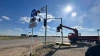
In Indonesia's Sumatra, a stretch of provincial highway was fitted with some six hundred Boswei solar streetlights two years ago. When a company engineer visited on a routine check earlier this year—during the monsoon, when humidity hangs above 85 per cent for weeks on end and rainfall pushes past two thousand millimetres a year—the pole coatings showed no blistering, no rust spots, no peeling. The local procurement officer, whose previous supplier's lights had begun shedding paint within one rainy season, placed a second order without going back to tender. A repeat buyer, Boswei's sales team will tell you, is worth more than any trade show lead, because it means someone came back after they had already been burned once.
In the Philippines' Mindanao region, typhoons sweep through several times a year, and coastal road lighting is, in the blunt assessment of one contractor, essentially disposable. Boswei's engineering team recalculated pole wall thicknesses and flange dimensions against the region's historical wind-speed records, upgraded the anchor bolt pattern from four to six, and increased both the embedment depth and the reinforcement grade of the concrete foundation. That configuration was later adopted by the local municipal authority and written into its procurement specifications. Boswei did not lobby for this; the authority simply took the firm's engineering drawings and revised its own tender documents.
Cambodia saw a slightly different use case. A Chinese-backed industrial development zone on the outskirts of Phnom Penh opted for Boswei's solar streetlight systems during its initial construction phase—no trenching, no cabling, no transformer stations, each unit a self-contained system charging by day and illuminating by night. Two years in, the zone's management office ran the numbers: compared with a conventional grid-powered streetlight scheme, the savings on electricity and line maintenance alone had already exceeded the initial capital expenditure, which had been recovered within the first year.
In Kenya, on a section of the Nairobi-Mombasa highway, Boswei's solar streetlights were installed last year. The local climate—wide diurnal temperature swings, punishing ultraviolet levels—places unusual stress on photovoltaic encapsulation and luminaire housing materials. Before shipping, the factory ran an additional two thousand hours of QUV accelerated weathering and thermal cycling on every batch. The lights are still on.
Nigeria's commercial capital, Lagos, presents a more fundamental challenge. The grid is unreliable; in many districts, municipal electricity barely exists. Solar street lighting in this context is not an upgrade—it is the baseline. Boswei supplied a high-output configuration for a stretch of arterial road: battery capacity, panel wattage and luminous efficacy pushed to the upper end simultaneously, running entirely off-grid. The feedback did not arrive as a technical report. It arrived as photographs. Night falls, the lights come on, and the roadside traders and motorcycle taxi riders gather underneath to keep working. No one needed to explain colour rendering index or illuminance uniformity. The pictures made the case by themselves.
New projects in Tanzania and Uganda are under discussion. By Boswei's count, the factory has shipped to more than thirty countries and territories across Southeast Asia and Africa.
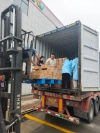
There is a fairly straightforward reason why these markets keep coming back. In Southeast Asia and sub-Saharan Africa, maintenance costs dwarf manufacturing costs. If a light fails, you cannot send a van. It has to work from the day it is installed, because sending someone to fix it often costs more than the fixture itself. Every pole that leaves Boswei's factory goes through both manual and machine inspection at several stations. Every batch has samples pulled for salt spray, lumen depreciation, and accelerated ageing. None of this is exciting, but six thousand miles from the factory gate, it is all that stands between a working light and a dead one.
Several years ago, at an industry exhibition, a buyer from Africa stood in front of the Boswei stand for a long time before saying anything. He leafed through a test report, ran his hand over a luminaire housing, and eventually remarked: "This is the same as what I saw on the ground." He was referring to a project in Tanzania from a couple of years earlier. He had never seen the Boswei trade stand before that day, but he had seen its lights.
Moments like that do something to your understanding of what an eighty-thousand-square-metre factory, a stack of certifications, and a CNAS laboratory full of test data are actually for. They land, ultimately, on one thing: someone who has used your product, seeing you again, nodding once, and saying, in whatever language, "I know your stuff holds up."
Manufacturing teaches you that after a while. A customer who tells you your stuff holds up—that counts more than any ranking, any headline, any polished brochure. Top three in Jiangsu, thirty-plus countries, all of it rests on something simpler: build it right, and the market does the talking for you.
Related News

.webp?x-oss-process=image/resize,w_100/quality,q_100)

.webp?x-oss-process=image/resize,w_100/quality,q_100)
Contact US
Product Information
Quantity
Unit
Piece
Support order samples, customization, wholesale direct, and complete payment. If the product you look for does not have corresponding customized content, pls fill out the form below to contact us, and we will reply ASAP.