
EN

Breaking the "Rainy Day Curse": How Bosiwei Achieves 365 Days of 100% Lighting Through System Integration and Algorithms
Introduction: The Crisis of Confidence in Solar Lighting and the Reality of Engineering
In the solar street lighting industry, one singular problem continues to plague municipal buyers and infrastructure contractors: the 'Rainy Day Failure.' Many products marketed as having a 3-5 day backup autonomy frequently fail by the third day during an actual week of continuous overcast weather. This 'blackout embarrassment' not only leads to resident complaints but also stigmatizes solar technology as 'unreliable.' Bosiwei (Jiangsu Bosiwei Optoelectronics Group Co., Ltd.) believes that achieving 365 days of lighting should not be a marketing gimmick; it must be the result of rigorous mathematical modeling and hardcore hardware synergy. Leveraging our 80,000-square-meter manufacturing verticality, we have dismantled this industry curse through three critical pillars: MPPT optimization, battery state-of-health (SOH) management, and intelligent power distribution.
I. Advanced MPPT Algorithms: The 'Energy Harvester' in Low-Light Conditions
Traditional PWM controllers essentially enter a state of dormancy during heavy cloud cover because the photovoltaic (PV) panel voltage drops below the battery charging threshold. Bosiwei equips its entire range with self-developed Maximum Power Point Tracking (MPPT) intelligent controllers.
1. Millisecond-Level Tracking Efficiency: Our MPPT algorithm locks onto the optimal output point of the PV panel at millisecond frequencies. In diffuse light environments—typical of rainy seasons—where voltage is extremely low, the Bosiwei system still captures minute currents to trickle-charge the battery. Data from our 2026 performance tests indicate that Bosiwei’s MPPT controllers achieve up to 45% higher charging efficiency in low-light environments compared to standard PWM systems.
2. Low-Voltage Activation Technology: By optimizing the series-parallel configuration of our PV modules and the controller's startup voltage threshold, our street lights begin harvesting energy at the break of dawn or during torrential rains. This 'incremental harvesting' strategy serves as the primary line of defense against long-term solar deficits.
II. Battery Management Systems (BMS): The Strategic Balance of Depth of Discharge (DOD)
Many solar lights go dark because of exaggerated battery capacities or aggressive discharge protection strategies that fail to account for weather patterns. Bosiwei adheres to a 'Manufacturing Integrity' logic in battery deployment.
1. Grade-A LiFePO4 Cells: We utilize exclusively new, Grade-A Lithium Iron Phosphate (LiFePO4) cells. The nominal capacity of a Bosiwei battery is the actual measured capacity. We strictly prohibit the use of Grade-B cells or repurposed 'second-life' automotive batteries, which are rampant in low-cost alternatives.
2. Adaptive Power Regulation (APR): The Bosiwei BMS features an adaptive power adjustment function. When the system detects a decline in State of Charge (SOC) compounded by multiple days of insufficient solar irradiance, it autonomously activates an 'Intelligent Power-Saving Mode.' Instead of an abrupt shutoff, the system linearly reduces the luminaire’s wattage. For instance, if the battery reaches a 20% SOC, the system may adjust output to 30% of peak wattage, ensuring the lamp stays lit through the most critical pre-dawn hours. This logic ensures that the 'Light Never Fails,' maintaining the safety baseline of the urban environment.
III. Engineering Redundancy: All-Weather Assurance for Diverse Climates
In the engineering paradigms of 2026, Bosiwei advocates for 'Precision Configuration' based on specific GPS coordinates and historical meteorological data.
1. Customized Autonomy Days: Based on historical big data for a project’s specific location, we customize the ratio between PV panel wattage and battery capacity. In rainforest regions, we proactively increase PV power redundancy to ensure the battery can reach full charge within a very short solar window. Our standard engineering packages typically provide 7-10 days of backup autonomy, significantly exceeding the industry average of 3 days.
2. IP68 and Thermal Management Synergy: Rainy weather is invariably accompanied by high humidity. Bosiwei's control compartments utilize IP68-rated, fully sealed die-cast aluminum enclosures combined with specialized waterproof breathing valves. This design allows for heat dissipation while preventing internal condensation, ensuring that sensitive electronic components remain stable during humid monsoons.
IV. Spotting the 'Fakes': A Buyer’s Guide to 365-Day Reliability
Bosiwei proactively shares three methods to identify truly reliable solar solutions:
1. Verify the Power-to-Panel Ratio: A 100W luminaire paired with an 80W PV panel claiming 365-day reliability is a mathematical impossibility. Bosiwei maintains a scientific ratio where the panel wattage significantly exceeds the lamp wattage to ensure excess charging capacity.
2. Audit Battery Compartment Volume: Battery capacity is physically correlated with volume. If a battery box is suspiciously thin or small yet claims hundreds of Amp-Hours (AH), it is likely a fraud. Bosiwei’s 80,000sqm facility is open for on-site capacity auditing by our clients.
3. Demand Smart Dimming Transparency: A quality system should provide a clear dimming schedule. Bosiwei’s smart platform displays real-time current output curves nightly, making 'Non-Stop Lighting' a visible, verifiable fact.
V. Case History: Half-Year Rainy Seasons in Southeast Asian Ports
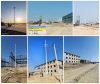
In early 2026, Bosiwei deployed 2,000 units of intelligent street lights in a major port city in Indonesia. This region experiences a monsoon season from October to March, where continuous rain for over 10 days is common. We implemented a configuration of MPPT + High-Output PV Panels + APR Algorithms. Throughout the subsequent monsoon, the project maintained a 100% lighting rate with zero failures. The local municipal engineer commented: 'Bosiwei has made us realize for the first time that solar street lighting can be as reliable as the electrical grid.'
VI. Supply Chain Transparency and Technical Audit Paths
The ability to deliver 365-day reliability stems from our control over the entire supply chain. At Bosiwei, we don't just assemble; we manufacture. Every MPPT controller is programmed in-house, every battery pack is assembled and tested in our facility, and every luminaire undergoes rigorous photometric verification. We provide our B2B partners with 'Technical Audit Paths,' allowing them to trace the origin and test results of every critical component. This level of transparency is what builds the 'Long-Term Trust' necessary for large-scale municipal infrastructure projects.
VII. Future Proofing: Maintenance-Free Operation for the Next Decade
Reliability in 2026 means more than just staying lit; it means staying lit without intervention. By combining Grade-A materials with intelligent protection algorithms, Bosiwei extends the service interval of its solar systems to over 8 years. Our integrated IoT monitoring allows municipal managers to see the 'Heartbeat' of their city's lighting, identifying potential issues before they lead to a dark street. This is the definition of a 'Practical' solution for the modern age.
VII. Future Proofing: Maintenance-Free Operation for the Next Decade — A Vision for 2026
Reliability in 2026 means more than just staying lit; it means staying lit without intervention for years on end. By combining Grade-A materials with intelligent protection algorithms, Bosiwei extends the service interval of its solar systems to over 8-10 years. Our integrated IoT monitoring allows municipal managers to see the 'Heartbeat' of their city's lighting—visualizing real-time data on battery health, charging currents, and energy savings. This level of technical oversight allows for predictive maintenance, where potential issues are identified and resolved remotely before they ever lead to a dark street. This is the definition of a 'Practical' and 'Real-World' solution for the modern age, turning the uncertainty of solar power into a reliable asset for urban governance. We don't just provide lights; we provide the peace of mind that comes from knowing your infrastructure is managed by the world's most advanced lighting logic.
VIII. Technical Appendix: System Resilience Parameters
For the engineering auditor, Bosiwei provides the following verified baseline parameters: Controller Type: Ultra-High Efficiency MPPT (99.5% tracking accuracy) / Battery Chemistry: Grade-A LiFePO4 (3000+ cycles at 80% DOD) / PV Panel: N-Type TOPCon Mono (22%+ efficiency) / System Ingress Protection: IP68 (Full immersion proof) / Operational Temp Range: -20°C to +70°C. Each unit is individually calibrated at our Gaoyou facility to ensure these standards are met before departure.
Conclusion: Bosiwei — Delivering 'Unfailing Certainty' to Global Infrastructure
In 2026, the heart of smart lighting is not found in flashy features, but in the steady, unwavering glow that rises precisely on time, every single night, regardless of the weather. Bosiwei (Jiangsu Bosiwei Optoelectronics Group) relies on its deep industrial manufacturing foundation to translate complex power electronics into a tangible sense of security for every street. We sincerely invite engineering clients, municipal planners, and project integrators who demand extreme stability to visit our headquarters in Gaoyou, to witness the technical rigor and 'Manufacturing Integrity' behind the lights that never fail. Join us in building a future where the darkness of a rainy night is a thing of the past.
Related News






Contact US
Product Information
Quantity
Unit
Piece
Support order samples, customization, wholesale direct, and complete payment. If the product you look for does not have corresponding customized content, pls fill out the form below to contact us, and we will reply ASAP.